
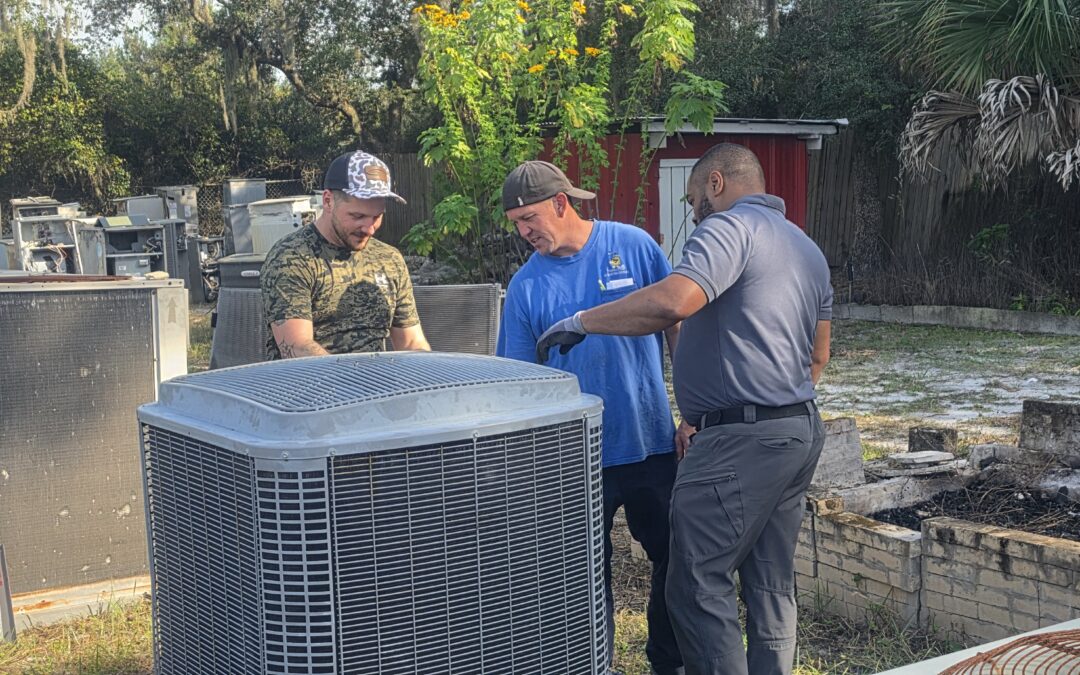
When it comes to obtaining the knowledge, sills, and abilities within the HVAC industry, hands-on experience goes a long way. Naturally we share a great deal of insight, safety, and applications within the classroom session, but there is nothing like “doing.”
Wonder what it takes to be a great HVAC Service Technician? HVAC Technical Academy works with numerous HVAC companies, certification organizations, and advisors for one goal: deliver the very best.
HACTA: HVAC Essentials
HACTA: HVAC Essentials
Can you imagine preparing for surgery only to find out the doctor never experienced any hands-on training. Great he/she received a great deal of theory… but come on, really? No doubt theory and classroom experience has its place (never diminish classroom value) but all trades programs share common elements.
Focusing on HVAC service technician needs, the short list includes the following: the right tools, technical knowledge, safety equipment, and troubleshooting skills to diagnose, repair, and maintain heating, ventilation, air conditioning, and refrigeration systems, all of which are part of their six-week program at our Sanford Facility.
During our program, all participants receive fresh out of the box professional tools. The list is long and includes a clamp meter, digital multimeter, digital manifold gauge set (A2L compatible), tool bag, cordless drill, tubing cutter, and much more. At the beginning of week two, participants receive their tools to use and their tools to keep upon completion.
We take safety seriously, personal protective equipment (PPE) handed out includes safety glasses, work gloves, and Lockout/Tagout equipment. In addition, upon completion of our intense six-week HVAC program, OSHA 10 General Industry is provided for all graduates. OSHA 10 training: hazard recognition, hazard prevention is an advantage for all.
When it comes to technical knowledge, skills, and abilities, HVAC Technical Academy has this covered. Combining classroom, videos, simulations, and hands-on approach to learning equips all to begin the job with confidence and competence. Core topics encompass electrical, full refrigerant cycle, airflow, hating, controls, troubleshooting, preventive maintenances, vacuum, recovery, component replacement, motor diagnosing, building plenum/distribution boxes, running flex, and a whole lot more.
We don’t just talk about topics; we get down and perform the function. For example, when it comes to diagnostics, participants perform the following these tasks: complete system inspection, checking thermostat operations and electrical voltage and amperage, test capacitors, contactors, and motor operation, inspect evaporator and condenser coils (as well as cleaning), building condensate drainages, evaluate refrigerant pressures and temperatures, calculate superheat and subcooling, and check for refrigerant leaks. This list is not all inclusive, but I think you will get the picture of what professional HVAC technicians are expected to do and what HVAC Technical Academy prepares each participant to get on the job with minimal onboarding.
Can’t forget customer service. Technicians are in the customer service business, every day during our six-week program, customer service / relationship building is more than reviewed, it is practiced,
With a focus on a “learn by doing” methodology, our graduates gain the knowledge, skills, and abilities to get the job done. Our applications and learning style is not for individuals looking for a slow easy pace. Truth is the commitment we require is not for everyone. In other words, for those looking for a softer approach, I don’t recommend HVAC Technical Academy… for those looking for an aggressive way to learn and begin their HVAC career in less than two months’ time, give me a call and schedule a visit.
Looking forward to being part of this journey. For those interested in HVAC as a career, give me a call.
Danny
407-878-0474